
One CSV, four reports
The first prototype read 16 of 76 columns – and showed how much the other 60 hold.
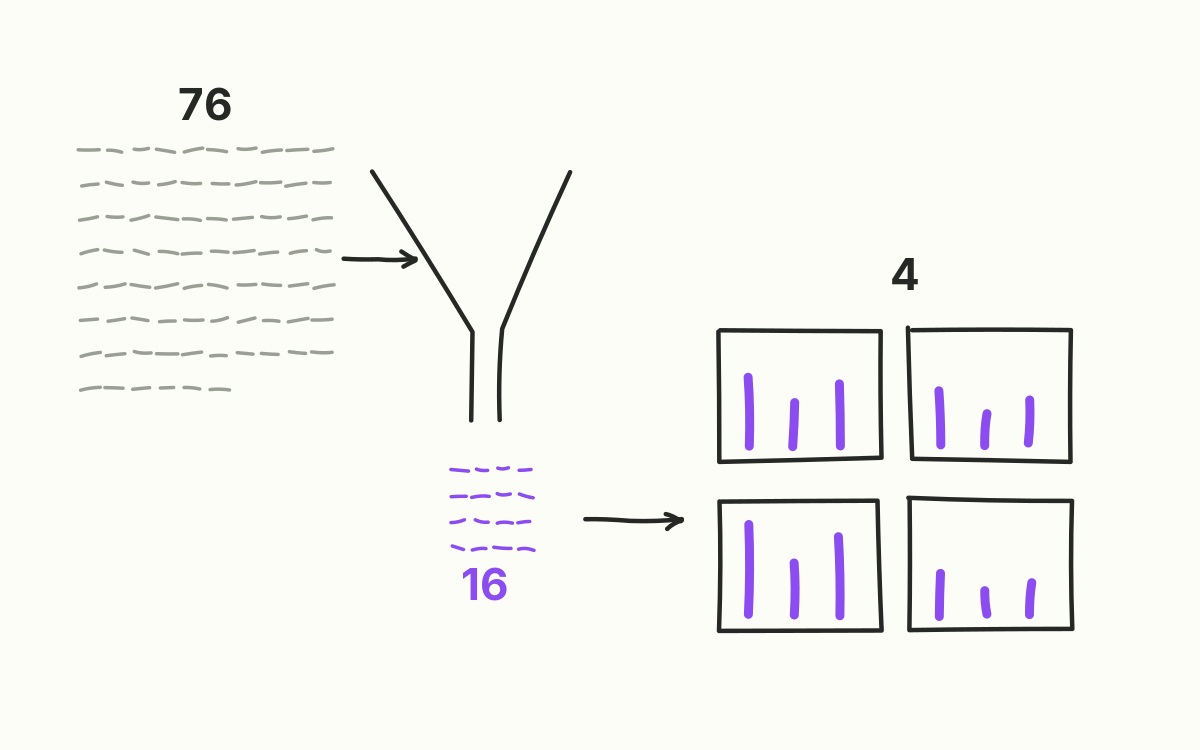
Every night the ERP writes an export containing every receipt of the year. 76 columns per row: item, channel, warehouse, price, shipping, payment method, credit notes, cancellations. And yet each morning we were looking at four charts. Why, actually?
The first Pythia prototype answered exactly that question – just not the way we had hoped.
What the prototype could do
It read a single receipts CSV and took 16 of its 76 columns. From those it calculated four fixed reports, including revenue by month. That was it: no filters, no comparisons, no way to follow a number down to a single item.
For a first demonstration that was enough. The charts looked tidy and the numbers appeared quickly. But the second question in the meeting – “And what does that look like for our own shop only?” – could no longer be answered.
Everything in one pot
The bigger problem was invisible. The prototype treated every row the same. Invoice, credit note, order and stock movement all went into the same pot. A credit note therefore distorted “revenue”, and an internal transfer counted like a sale.
A report that treats every receipt the same is not a sales report. It is a sum.
Then there were the things that didn’t appear at all: no returns analysis, no purchasing view, no warehouse or logistics perspective. Yet that is exactly where the questions in retail cost money.
What we learned
A prototype answers the questions you asked it while building it. A platform has to answer questions somebody will only ask tomorrow. That is not a difference in the number of charts, but in how the data is stored.
We took three lessons from the prototype:
- The 60 unread columns are the real treasure. Channel, warehouse, shipping, payment method, the chain of receipts – that is where the knowledge lies that explains deviations.
- Receipt types belong apart. Sales, credit notes, purchasing and stock movements are different things and need their own tables.
- The export is not a clean data format. Inconsistently written country codes, zero-value lines for samples and free items, characters where they don’t belong. Ignore that and you calculate with wrong numbers.
These lessons became a brief: Pythia should no longer be a report but a data platform on which any report can be built.
Next month: a platform, not a report – how Pythia collects data first, structures it next and only then calculates.