
Order in the range
Clusters, product groups and families: from the big picture down to a single item.
“How much did we make last year with all our greenhouses?” In the ERP that is a hard question. Greenhouses are spread across several product groups, some sit in an old catch-all group, the second-quality versions have their own item numbers, and some are sold as bundles. In the end somebody adds it up by hand in a spreadsheet – and everyone gets a different number.
Clusters: the business view
Pythia gets its own order for this: clusters. A cluster is a business range group maintained by controlling – across the ERP product groups. “All greenhouses” is a cluster, whatever product group the individual item sits in.
The assignment comes from REXAdata, where it is maintained. Pythia takes it over, doesn’t recalculate it and doesn’t correct it. If Pythia notices something, it reports it – the assignment itself stays with controlling.
From the big picture down to the item
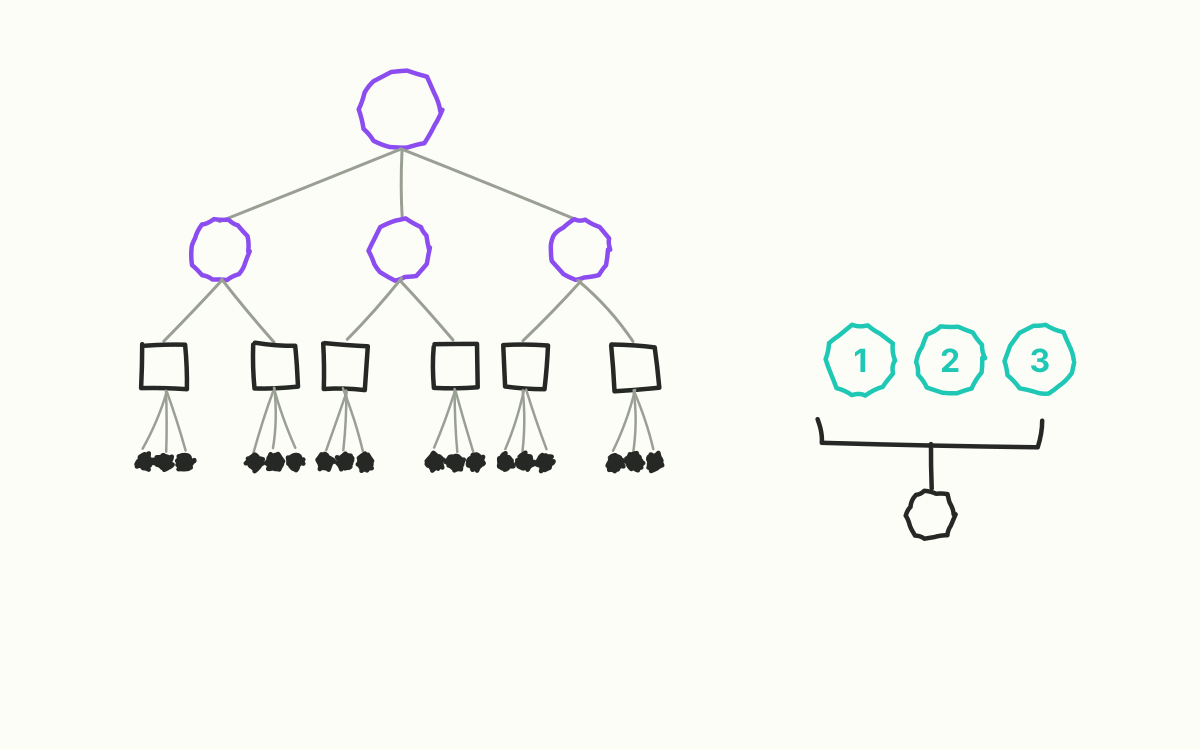
Clusters create a ladder from the big picture down to the item:
- Total
- Channel
- Cluster
- Product group
- Item family
- Item
Every number can now be placed on one of these rungs – the basis for later following any outlier down to the single item.
Family and quality
One rung of this ladder doesn’t exist in the ERP as such: the item family. The same goods are often sold in first, second and third quality, each with its own item number. Pythia recognises from the structure of the number which numbers belong together and which quality grade they carry.
That makes questions possible such as: does second quality sell better than first in one channel? Does third quality come back more often? And how does an item develop across all qualities?
Bundles have to belong somewhere
Bundles are a special case: they often have no cluster of their own, because controlling maintains the components, not the package. Their revenue ended up under “Unknown”. So Pythia lets a bundle without its own assignment inherit the cluster of its most expensive component. If controlling later assigns the bundle itself, the inheritance disappears on its own.
Roughly half of all items have a cluster – but that half carries practically all of the revenue. “No cluster” is the long tail.
Next month: the sales candle – why we show sales like a share price.